
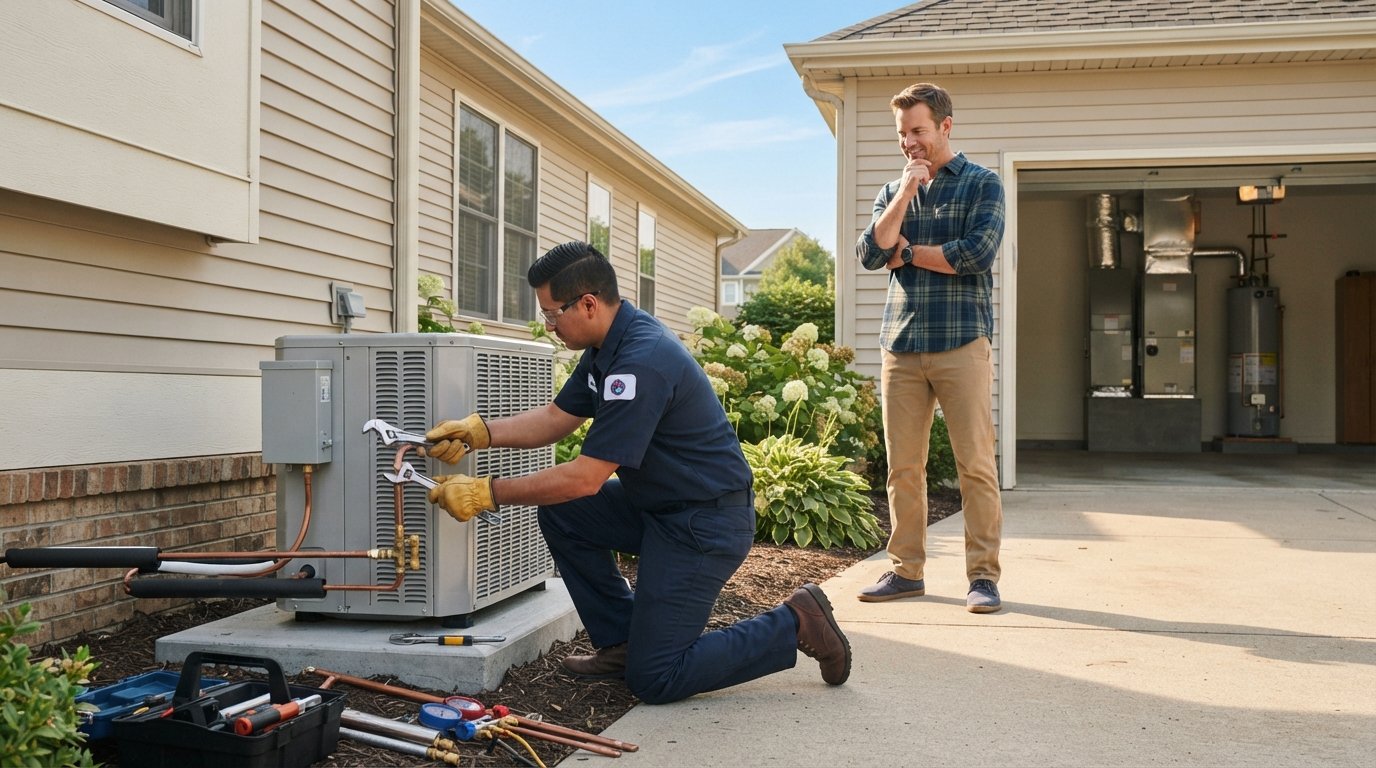
HVAC Installation Cost Guide: 2026 Pricing & Tips
Learn the true cost of HVAC installation, how to choose the right system, and avoid common contractor mistakes in this expert guide.

By Peter Hubert
Learn more about Heating System Installation or Replacement for guides, costs, and what to expect.
Compare Heating System Installation or Replacement Pros Near You

Enter your ZIP code to compare top-rated local professionals and request free quotes.
When your heating and cooling system fails on the hottest day of summer or the coldest night of winter, the urgency to replace it becomes real. But HVAC installation is not a spur-of-the-moment decision. It is a major home improvement project that involves careful planning, accurate budgeting, and choosing the right contractor. Whether you are replacing an aging unit or installing a system in a new home, understanding the full scope of the process can save you money, stress, and future headaches.
This guide walks you through everything from cost breakdowns and efficiency ratings to contractor selection and the installation process itself. You will learn what questions to ask, what to expect during the project, and how to avoid common pitfalls. By the end, you will feel confident about making an informed choice for your home and your comfort.
Why HVAC Installation Matters More Than You Think
Many homeowners view their HVAC system as a box that runs in the background. But the reality is that your HVAC system accounts for nearly half of your home's energy consumption. A poorly installed system can increase your utility bills by up to 30 percent, reduce indoor air quality, and shorten the lifespan of the equipment. On the other hand, a properly installed, high-efficiency system can lower your energy costs, improve comfort, and increase your home's resale value.
The installation process itself is just as important as the equipment you choose. Even the most expensive, top-rated furnace or air conditioner will underperform if it is not sized correctly, installed with proper refrigerant charge, or placed in a poorly designed duct system. This is why professional HVAC installation is not an area to cut corners. A reputable contractor will perform load calculations, inspect your ductwork, and follow manufacturer specifications to ensure optimal performance.
How Much Does HVAC Installation Cost in 2026?
The cost of HVAC installation varies widely depending on several factors: the type of system, the size of your home, the efficiency rating, and your geographic location. For a typical single-family home in the United States, you can expect to pay between $5,000 and $12,500 for a complete system replacement, including both heating and cooling. A furnace-only installation ranges from $2,500 to $6,000, while a central air conditioner alone costs between $3,000 and $7,500.
These figures include equipment, labor, and basic materials, but they do not include additional work like ductwork replacement, electrical upgrades, or permit fees. Older homes or large properties can drive costs higher, sometimes exceeding $15,000. It is essential to obtain multiple quotes from licensed contractors to get a realistic estimate for your specific situation. Remember that the lowest bid is not always the best value. You want a contractor who provides a detailed, transparent quote and has a track record of quality work.
To help you plan, here are the main cost components you will see in your HVAC installation quote:
- Equipment cost: The price of the furnace, air conditioner, heat pump, or boiler itself. High-efficiency models cost more upfront but save money over time.
- Labor cost: The contractor's time to remove the old system, install the new one, and test everything. This typically accounts for 30 to 40 percent of the total.
- Ductwork modifications: If your existing ducts are undersized, leaky, or damaged, you may need repairs or replacement, which adds $1,500 to $5,000.
- Permits and inspections: Most municipalities require a permit for HVAC work. Fees range from $100 to $500.
- Old equipment removal: Some contractors include disposal in their labor fee; others charge an extra $100 to $300.
Understanding these components helps you compare quotes fairly. A contractor who gives you a single lump sum without a breakdown may be hiding costs or using subpar materials. Always ask for an itemized estimate.
Choosing the Right HVAC System for Your Home
Selecting the right system is about more than matching the brand or size of your old unit. You need to consider your home's square footage, insulation, number of windows, and local climate. This is where a professional load calculation (often called a Manual J calculation) comes in. It determines the exact heating and cooling capacity your home needs, measured in BTUs (British Thermal Units). Oversized units cycle on and off too frequently, wasting energy and causing temperature swings. Undersized units run constantly, struggling to keep up and wearing out faster.
Efficiency ratings are another critical factor. For furnaces, look for the Annual Fuel Utilization Efficiency (AFUE) rating. A rating of 80 percent means 80 cents of every fuel dollar becomes heat. High-efficiency models reach 95 to 98 percent AFUE. For air conditioners and heat pumps, the Seasonal Energy Efficiency Ratio (SEER) measures cooling efficiency. Today's minimum standard is 14 SEER, but premium models reach 21 SEER or higher. In hotter climates like the Southwest, a higher SEER can significantly reduce your summer cooling bills.
Beyond the traditional furnace and AC split system, you have alternatives like ductless mini-splits, which are ideal for homes without ducts or for room additions. Heat pumps are becoming increasingly popular because they provide both heating and cooling and are highly efficient, especially in mild climates. Geothermal systems use the earth's constant temperature to heat and cool, but they come with a much higher upfront cost, often $20,000 or more. Your contractor can help you weigh the pros and cons based on your home and budget.
Signs You Need a New HVAC System
Knowing when to replace your HVAC system can save you from emergency breakdowns and spiraling repair bills. Most systems last 15 to 20 years, but their lifespan depends on maintenance, usage, and local conditions. If your system is approaching this age and you notice any of the following signs, it may be time to start planning for a replacement:
- Frequent repairs: If you are calling for service more than once a year, the cost of repairs is adding up. A good rule of thumb is that if a repair costs more than 30 percent of a new system's price, replacement is a better investment.
- Rising energy bills: A steady increase in your heating and cooling costs without a change in usage often signals declining efficiency.
- Uneven temperatures: Rooms that are always too hot or too cold, despite a functioning thermostat, point to an aging or undersized system.
- Strange noises: Grinding, squealing, or rattling sounds can indicate worn parts or a failing compressor.
- Poor air quality: Excessive dust, humidity problems, or strange odors coming from vents may mean your system is struggling to filter and condition air.
If you experience two or more of these issues, it is wise to get a professional assessment. An HVAC technician can measure your system's performance and give you an honest recommendation. Sometimes a simple repair will suffice, but other times, replacement is the more cost-effective long-term solution.
The HVAC Installation Process: Step by Step
Once you have selected a system and hired a contractor, the actual installation usually takes one to two days for a straightforward replacement. Here is what you can expect during the process:
- Home inspection and load calculation: The contractor measures your home, inspects the ductwork, and performs calculations to determine the correct system size.
- Removal of old equipment: The crew safely disconnects and removes your old furnace, AC unit, or heat pump. They also dispose of it according to local regulations.
- Installation of new equipment: The indoor unit (furnace or air handler) and outdoor unit (condenser or heat pump) are placed and connected. Refrigerant lines, electrical wiring, and drain lines are installed.
- Ductwork inspection and sealing: If needed, the contractor will repair or seal ductwork to prevent air leaks. This step is crucial for efficiency.
- System testing: The technician runs the system to check for proper airflow, refrigerant charge, gas pressure, and thermostat operation. They also test for carbon monoxide and gas leaks.
- Final walkthrough and paperwork: You receive a review of the system's operation, warranty information, and maintenance tips. The contractor files any necessary permits and schedules an inspection with your local building department.
While the installation day is the most visible part, the preparation work happening before is just as important. A good contractor will communicate clearly about what needs to be done, any potential issues discovered during the inspection, and how they plan to address them. They should also protect your floors, walls, and landscaping during the installation.
How to Choose a Reliable HVAC Contractor
The quality of your HVAC installation depends heavily on the contractor you choose. A skilled, honest professional will do a thorough job and stand behind their work. A poor contractor can leave you with a system that fails early, costs more to run, and voids your warranty. Here are some essential tips for vetting potential contractors:
- Verify licenses and insurance: Every state has its own licensing requirements for HVAC contractors. Ask for proof of a valid license, liability insurance, and workers' compensation coverage. This protects you if something goes wrong during the project.
- Check references and reviews: Look for online reviews on Google, Yelp, and the Better Business Bureau. Ask the contractor for a list of recent references and call a few of them. Ask about the quality of the work, cleanliness, and whether the project came in on budget.
- Get multiple quotes: You should receive at least three written estimates. Each quote should be itemized and specify the equipment brand, model, efficiency rating, and warranty terms. Be wary of quotes that are significantly lower than others; they may be cutting corners.
- Ask about certifications: Look for technicians who are NATE-certified (North American Technician Excellence). This is a recognized industry credential that demonstrates advanced knowledge and skill.
- Read the contract carefully: The contract should clearly state the scope of work, timeline, payment schedule, and warranty details. Do not sign until you understand every clause.
When you are ready to compare contractors, ContractorHomeQuotes can simplify the process. You can submit your project details online and receive free, no-obligation quotes from pre-screened, licensed local professionals. This saves you time and ensures you are only considering reputable contractors.
Financing Your HVAC Installation
HVAC installation is a significant expense, and not everyone has thousands of dollars in cash on hand. Fortunately, there are several financing options available to make the project more manageable. Many contractors partner with financing companies to offer installment plans with low or no interest for a promotional period. You can also consider a home equity loan, a personal loan, or a credit card with a 0 percent introductory APR.
Before you commit to any financing, compare the total cost, including interest and fees. A longer payment term means lower monthly payments but more interest over time. Also, check whether the contractor offers any rebates or incentives for high-efficiency systems. Federal tax credits and local utility rebates can offset the upfront cost. For example, the Inflation Reduction Act provides tax credits for heat pumps and other high-efficiency equipment. Your contractor can help you identify available incentives in your area.
Using ContractorHomeQuotes to get quotes also gives you a clearer picture of the total cost, so you can choose the financing option that fits your budget. The platform is free, and you are under no obligation to accept any of the quotes you receive.
Maintenance Tips to Extend Your System's Lifespan
After investing in a new HVAC system, you want it to last as long as possible. Regular maintenance is the key to achieving that goal. Here are some simple steps you can take to keep your system running efficiently:
- Change air filters regularly: Replace disposable filters or clean reusable ones every one to three months, depending on usage and household factors like pets.
- Keep the outdoor unit clear: Remove leaves, grass, and debris from around the condenser. Maintain at least two feet of clearance on all sides for proper airflow.
- Schedule annual tune-ups: Have a professional inspect and tune your system before each cooling and heating season. They will catch minor issues before they become major repairs.
- Monitor your thermostat: Use a programmable or smart thermostat to optimize energy usage. Setbacks of 7 to 10 degrees Fahrenheit for eight hours a day can save up to 10 percent on heating and cooling costs.
- Listen for odd noises: If you hear anything unusual, call a professional to investigate. Early detection can prevent costly breakdowns.
Following these tips not only extends the life of your system but also keeps your energy bills in check. A well-maintained system operates at peak efficiency, which is good for your wallet and the environment.
Common Mistakes to Avoid During HVAC Installation
Even with the best intentions, homeowners can make mistakes during the HVAC installation process. Being aware of these pitfalls can help you avoid them:
- Choosing price over quality: The cheapest quote often means lower-quality equipment or subpar workmanship. Focus on value, not just the initial cost.
- Skipping the load calculation: A contractor who guesses the system size based on your old unit is not doing the job properly. Insist on a Manual J calculation.
- Ignoring ductwork: If your ducts are leaky or undersized, even a new system will underperform. Make sure the contractor inspects and addresses duct issues.
- Not understanding the warranty: Know what is covered and for how long. Warranties typically cover parts for 10 years, but labor coverage may be separate and limited.
- Failing to get permits: Unpermitted work can cause problems when you sell your home and may void warranties. Ensure your contractor pulls the necessary permits.
By avoiding these common errors, you can enjoy a smooth installation process and a system that performs reliably for years.
Planning an HVAC installation is a big decision, but it does not have to be overwhelming. Start by understanding your needs, get multiple quotes, and choose a contractor who prioritizes quality and transparency. With the right preparation, you will stay comfortable and save money for many years to come.