
Door Replacement Cost and Key Planning Tips for 2026
Plan a smooth door replacement with this guide: learn to spot warning signs, choose materials, set a budget, and hire the right contractor.

By Jessica Reis
Learn more about Door Installation for guides, costs, and what to expect.
Compare Door Installation Pros Near You

Enter your ZIP code to compare top-rated local professionals and request free quotes.
Your front door is one of the first things people notice about your home, and it works hard every day. It endures weather, frequent use, and constant exposure to the elements. Over time, even the best doors show signs of wear, become drafty, or simply look outdated. When that happens, a door replacement becomes more than a cosmetic upgrade; it is a practical investment in comfort, security, and energy efficiency. Yet many homeowners delay this project because they are unsure about the process, the costs, or how to choose the right contractor. This guide walks you through everything you need to know, from recognizing the right time to replace to budgeting accurately and selecting a professional who will deliver quality work.
How to Know It Is Time for a Door Replacement
Doors do not last forever, and their lifespan depends heavily on the material, local climate, and how well they were installed. A typical entry door can last anywhere from 20 to 50 years, but several signs can tell you it is time to act sooner. If you notice drafts around the frame even when the door is closed, or if your energy bills have crept up without another explanation, your door may be letting conditioned air escape. Visible damage like rotting wood, rusted metal, or warped panels not only looks bad but can also compromise security and insulation.
Other indicators are more subtle. A door that sticks when you open or close it may have swollen or misaligned components. If you see daylight through the gaps when the door is shut, the seal has failed. Condensation between double-pane glass panels in a door with windows is another clear sign that the seal has broken. In our guide on 5 Signs It’s Time for a Front Door Replacement, we break down these warning signals in detail so you can assess your own situation with confidence.
Ignoring these issues rarely saves money. A failing door can lead to water damage in your floor and subfloor, increased pest entry, and higher heating and cooling costs. Replacing it sooner rather than later prevents more expensive repairs down the line.
Choosing the Right Door Material for Your Needs
The material you choose affects everything from durability to maintenance to curb appeal. Each option has trade-offs, and the best choice depends on your priorities, budget, and the style of your home.
- Steel doors: These are durable, low maintenance, and offer excellent security. They resist warping and require less upkeep than wood, though dents can be difficult to repair and they may be prone to rust if the surface is scratched.
- Fiberglass doors: Known for their versatility and energy efficiency, fiberglass can mimic the look of wood without the maintenance. They handle extreme temperatures well and resist dents, making them a popular long-term choice.
- Wood doors: Beautiful and classic, wood offers unmatched aesthetic appeal and can be customized with paint or stain. However, it demands regular maintenance and is susceptible to rot, swelling, and insect damage in humid climates.
- Aluminum and glass doors: Often used for patio or storm doors, these are lightweight and easy to clean, but they are less energy efficient than other options and can dent or corrode in coastal areas.
For most homeowners, steel and fiberglass provide the best balance of cost, durability, and energy performance. If you are leaning toward wood, consider a steel or fiberglass door with a wood-grain finish to get the look you want without the upkeep.
Your local climate plays a big role too. In hot, sunny regions, a door with a high solar heat gain coefficient can help keep your home cooler. In cold climates, look for a door with a low U-factor and good insulation. The best material for your front door often comes down to balancing these factors with your budget and the architectural style of your home.
Understanding Door Replacement Costs
Cost is often the biggest concern for homeowners, and with good reason. A door replacement is not a minor expense, but it is also not as unpredictable as many people fear. The total price depends on the door itself, the labor, the hardware, and any additional work like frame repair or trim replacement.
On average, a standard single entry door replacement costs between $800 and $2,500 including professional installation. That range covers a basic steel door with minimal adjustments. If you choose a high-end fiberglass or wood door, add custom glass, or need significant structural work, the price can climb to $4,000 or more. Garage doors are a separate category, and the garage door replacement cost varies widely based on size, material, and whether you include an opener.
Here is a rough breakdown of what you are paying for:
- Door unit: The door itself, frame, and hardware account for roughly 40% to 60% of the total cost.
- Labor: Professional installation typically runs $200 to $600, depending on the complexity and local rates.
- Additional materials: Caulk, shims, flashing, and new trim can add $50 to $200.
- Disposal: Removing and hauling away the old door usually costs $50 to $100.
These numbers are guidelines, not quotes. Prices vary by region, and a custom size or unusual installation will cost more. Always get at least three detailed estimates from licensed contractors before committing.
Planning Your Door Replacement Budget
Once you have a sense of the average costs, you can start building a realistic budget. Begin by deciding what is non-negotiable for your new door. Do you need a specific security feature? Are energy efficiency ratings a priority? Is the aesthetic more important than the price tag? Answering these questions helps you allocate funds where they matter most.
Next, factor in the timing. If you are replacing a door as part of a larger renovation, you may be able to bundle the work and negotiate a better rate. If it is a standalone project, be prepared to pay a bit more for a contractor who is willing to do a small job. Also, consider the season. Contractors are busier in spring and summer, so you might get a better price in late fall or winter, though weather can complicate the installation.
Do not forget to set aside a contingency fund of 10% to 15% of the total budget. Even with a thorough inspection, unexpected issues like rotted framing or a non-standard rough opening can surface once the old door is removed. Having a cushion prevents project delays and financial stress.
Measuring and Preparing for Installation
Accurate measurements are critical for a smooth door replacement. If you are ordering a pre-hung door, the unit includes the door slab, frame, and hinges, and it must fit your rough opening precisely. The rough opening is the framed hole in your wall where the door sits. To measure it, remove the interior casing and measure the width and height from stud to stud, and the depth from the interior wall to the exterior wall. Standard sizes are 36 inches by 80 inches for entry doors, but custom sizes are common.
Before the contractor arrives, clear the area around the door both inside and out. Move furniture, rugs, and decorations away from the entryway. Protect your floors and walls from dust and debris, as installation can be messy. If you have pets, plan to keep them in a separate room during the work. Also, make sure the contractor has a clear path to bring in the new door and remove the old one.
During the installation, a professional will typically remove the old door unit, inspect the framing for rot or damage, and make any necessary repairs. They will then set the new pre-hung door, shim it level and plumb, secure it, and finish with insulation, flashing, and trim. The entire process usually takes four to eight hours, depending on the complexity.
DIY vs. Hiring a Professional Contractor
Some experienced DIYers might consider installing a door themselves to save on labor. It is a tempting option, but door replacement requires a high level of precision. A door that is not perfectly level or plumb will stick, leak air, and wear out prematurely. Mistakes can also void the manufacturer's warranty and lead to water intrusion, which is a costly problem to fix.
Professional contractors bring experience, specialized tools, and knowledge of local building codes. They can spot issues you might miss, such as improper flashing or inadequate insulation. They also carry insurance, which protects you if something goes wrong during the installation. Most importantly, a professional will guarantee their work, giving you peace of mind that the door will function properly for years.
If you are still leaning toward DIY, be honest about your skill level. Installing a pre-hung exterior door is not the same as replacing an interior door. It involves structural elements, weatherproofing, and often requires a permit. In most cases, hiring a licensed contractor is worth the extra cost for the assurance that the job is done right.
Maximizing Energy Efficiency and Security
A new door is a chance to improve your home's performance in two key ways: energy efficiency and security. Look for doors with the ENERGY STAR label, which means they meet strict standards for insulation and air leakage. A well-insulated door can lower your heating and cooling bills by reducing drafts and heat transfer. Pair your new door with weatherstripping and a quality threshold to seal out the elements.
For security, choose a door with a solid core and a deadbolt lock that meets ANSI Grade 1 or Grade 2 standards. The door's frame is just as important as the lock. A reinforced jamb and strike plate can prevent forced entry. Many homeowners also opt for a smart lock, which allows keyless entry and remote monitoring, adding convenience and peace of mind.
Don't forget about the small details. A door sweep at the bottom blocks drafts and keeps out insects. A peephole or camera doorbell lets you see who is outside before opening the door. These additions are relatively inexpensive but significantly improve comfort and safety.
Selecting the Right Contractor and Getting Quotes
Choosing the right contractor is just as important as selecting the right door. A quality installation can make an average door perform beautifully, while a poor installation can ruin the best door on the market. Start by asking for recommendations from friends, family, or neighbors who have recently had similar work done. Then, verify that each candidate is licensed, insured, and has a good track record.
When you get quotes, be wary of prices that seem too good to be true. They often are. A very low bid may mean the contractor is cutting corners on materials or labor, or that they will add unexpected charges later. On the other hand, an extremely high bid does not always guarantee better quality. Compare the details of each estimate, including the door brand, model, hardware, warranty, and the exact scope of work.
Ask for references and check them. A reputable contractor will happily provide contact information for past clients. Follow up with those references and ask about their experience, the quality of the work, and whether the project stayed on budget and on schedule. Also, check online reviews on sites like the Better Business Bureau and Google. This research takes time, but it is the best way to avoid costly mistakes.
What to Expect During the Installation Process
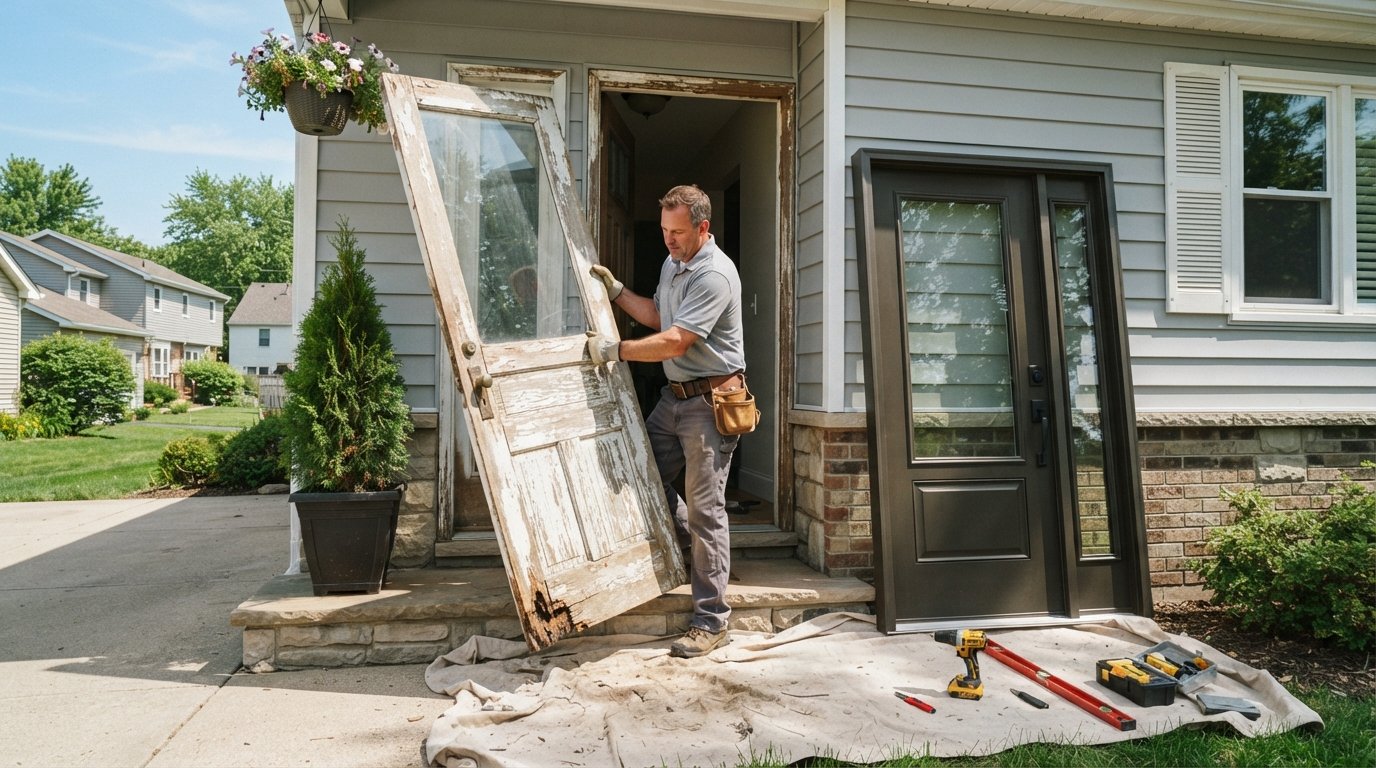
Once you have selected a contractor and scheduled the installation, you should know what to expect. The crew will arrive with the new door unit and all necessary materials. They will start by protecting the surrounding area with drop cloths and plastic sheeting. Then, they will remove the old door and frame, being careful not to damage the surrounding siding or interior walls.
After the old unit is out, the contractor will inspect the rough opening. If there is any rot or damage, they will repair it before proceeding. This is a common finding, especially in older homes, and it is one reason why a contingency fund is wise. The new door is then set into the opening, shimmed to ensure it is level and plumb, and secured with screws. Flashing and weatherproofing are applied to prevent water intrusion, and the gaps are filled with insulation. Finally, the interior and exterior trim are installed, and the contractor will test the door to ensure it opens, closes, and locks smoothly.
After the installation, walk through the work with the contractor. Make sure you understand how to maintain your new door, what the warranty covers, and how to contact them if any issues arise. A good contractor will be happy to answer your questions and provide a warranty in writing.
Common Mistakes to Avoid
Even a straightforward door replacement can go wrong if you are not careful. One of the most common mistakes is choosing a door based solely on price. The cheapest door may not be energy efficient, durable, or secure, and you could end up replacing it sooner than expected. Conversely, overspending on a premium door when a mid-range option would meet your needs is also a waste of money.
Another frequent error is neglecting to check the contractor's credentials. Unlicensed or uninsured contractors can leave you liable for injuries or property damage, and their work may not meet local building codes. Always verify that your contractor is licensed and insured before they start work.
Finally, many homeowners forget to consider the door's swing direction, handle placement, and clearance in tight spaces. A door that opens the wrong way, or a handle that hits a wall when opened, is a daily annoyance. Double-check these details before ordering, and consult with your contractor if you are unsure.
Frequently Asked Questions
How long does a door replacement take?
A professional installation typically takes four to eight hours for a single door. Custom or complex installations may take longer, especially if there is frame repair involved.
Can I replace just the door slab instead of the whole unit?
Yes, but it is generally not recommended for exterior doors. Replacing the slab requires the existing frame and hinges to be in good condition, and it is difficult to achieve a proper seal. A pre-hung unit is easier to install and performs better.
Do I need a permit for a door replacement?
Most municipalities do not require a permit for replacing an exterior door if the opening size does not change. However, if you are moving the door or altering the structure, a permit may be necessary. Your contractor should know the local requirements.
What is the best time of year to replace a door?
Spring and fall are ideal because temperatures are moderate, which makes installation easier and helps the weatherproofing materials cure properly. However, a skilled contractor can install a door in any season.
How can I make my new door last longer?
Regular maintenance is the key. Clean the door and hardware with mild soap and water, check the weatherstripping periodically, and touch up any scratches or dents to prevent rust or rot. For wood doors, re-seal or repaint every few years.
A door replacement is a meaningful project that improves your home's appearance, comfort, and value. By understanding the costs, choosing the right material, and hiring a qualified professional, you can enjoy the benefits of a new door for decades. Use the resources on ContractorHomeQuotes to research further, and when you are ready, request quotes from trusted local contractors to get started.