
Basement Waterproofing Methods Cost Comparison: 2026 Prices
Compare basement waterproofing methods costs and find the best value for your home. Get transparent price ranges for interior, exterior, and drainage fixes.
By James Morgan
Learn more about Home Waterproofing for guides, costs, and what to expect.
Compare Home Waterproofing Pros Near You

Enter your ZIP code to compare top-rated local professionals and request free quotes.
A damp basement is more than a nuisance. It can undermine your home's structural integrity, trigger mold growth, and destroy stored belongings. Yet many homeowners delay action because they worry about cost. The truth is that basement waterproofing methods cost comparison reveals a wide range of prices, from a few hundred dollars for simple sealants to over ten thousand for full drainage systems. Your final bill depends on the method, the severity of the problem, and your location. This guide breaks down each option, explains what drives the price, and helps you decide which solution offers the best long-term value.
Why Basement Waterproofing Costs Vary So Much
Before diving into specific methods, it helps to understand why quotes for what seems like the same problem can differ by thousands of dollars. The primary driver is the source and volume of water. A minor seepage through a hairline crack calls for a cheap fix. A high water table that pushes water through the floor requires a comprehensive system. Other factors include your home's age, foundation type (poured concrete, block, stone), accessibility, and local labor rates. In regions with frequent heavy rains, contractors may charge more due to demand and the need for more robust solutions. Always get at least three estimates to gauge the local market, and use a trusted platform like FreeQuotes.Contractors to connect with pre-vetted local pros.
Another variable is whether you tackle the problem from the inside or outside. Interior repairs are generally cheaper and less disruptive, but they manage water rather than stop it at the source. Exterior excavation can be more effective but costs significantly more due to digging, landscaping restoration, and permits. The table below summarizes typical price ranges for common methods. Note that these are national averages; your actual costs may be higher or lower.
- Sealants and crack injection: $300 to $1,500
- Interior drainage systems (French drain, sump pump): $2,000 to $7,000
- Exterior waterproofing (membrane, footing drain): $5,000 to $15,000+
- Dehumidification and ventilation: $500 to $2,500
- Grading and downspout extensions: $200 to $1,500
Keep in mind that these figures are ballpark estimates. For a more accurate picture, you need to understand what each method entails and the specific conditions of your basement.
Interior Waterproofing Methods and Costs
Interior solutions are popular because they are less invasive and usually more affordable. They do not require digging up your yard, so you avoid the cost of replacing landscaping, patios, or decks. However, they do not stop water from entering the foundation; they collect and redirect it away from your living space. This is often sufficient for finished basements where the goal is to protect flooring and walls.
Sealants and Crack Injection
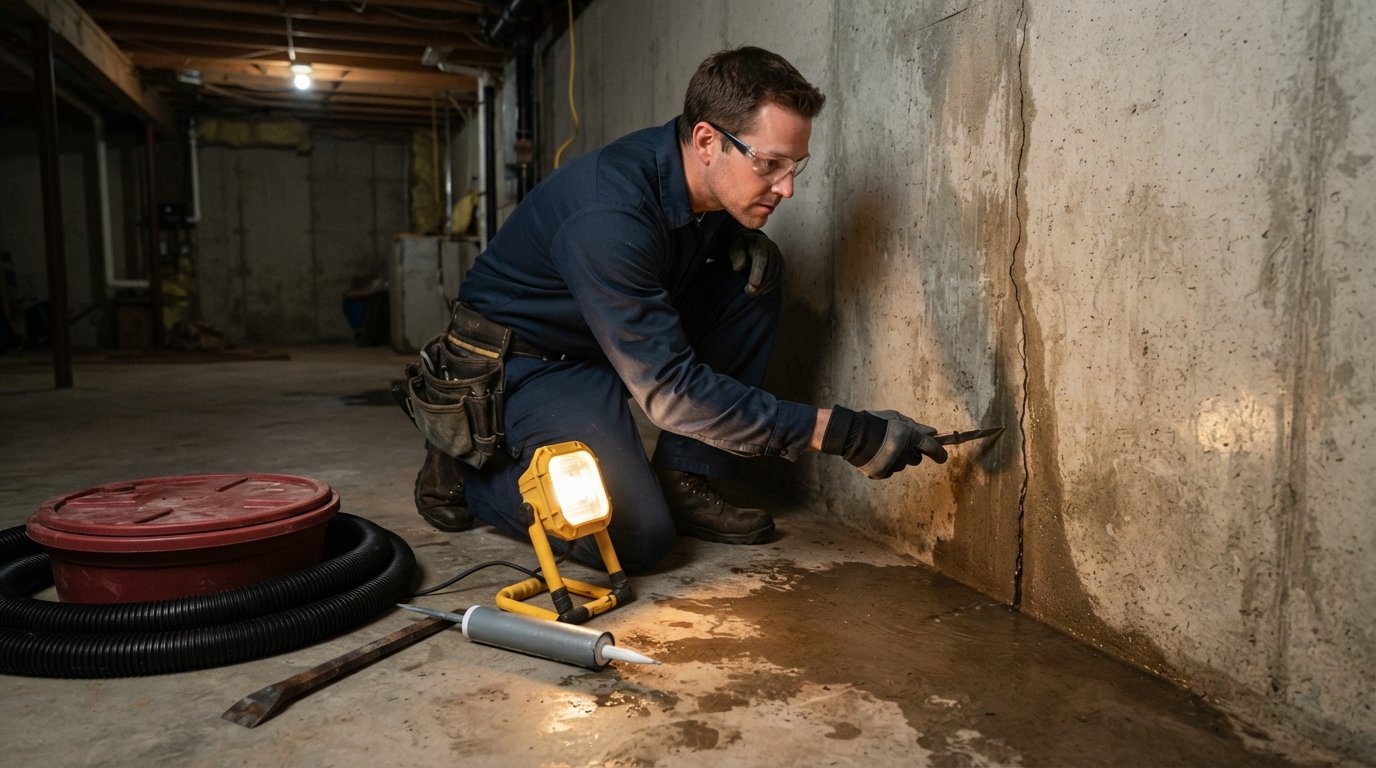
For minor leaks, applying a masonry sealer or injecting cracks with polyurethane or epoxy can be a quick fix. Sealers are painted or sprayed onto the interior walls and floors, creating a barrier that repels moisture. Crack injection involves drilling ports into the crack and pumping in a resin that expands and seals the opening. This method works best for non-structural cracks and can last several years. Costs range from $300 to $800 for DIY sealers (materials only) or $500 to $1,500 for professional injection. Keep in mind that if the crack is due to ongoing settlement, it may reopen, and you will need a more permanent solution.
Interior Drainage Systems
The most common interior solution is a sub-floor drainage system, often called a French drain or weeping tile. Contractors break up a narrow strip of concrete along the perimeter of the basement floor, dig a trench, lay perforated pipe, and cover it with gravel before pouring new concrete. This system collects water that seeps through the walls or floor and directs it to a sump pump, which discharges it outside. The cost for a full perimeter system typically ranges from $2,000 to $7,000, depending on the basement size and pump quality. A sump pump alone costs $300 to $1,000 installed. This method is highly effective for managing hydrostatic pressure and is often the go-to for finished basements.
Dehumidification and Ventilation
Sometimes the problem is not liquid water but high humidity. A dehumidifier can keep the air dry, preventing mold and musty odors. Prices for a quality unit range from $200 to $1,500, with installation extra if you need a drain line. Ventilation fans or ERV systems can also help, costing $500 to $2,500. These are not standalone waterproofing solutions but are important complements to drainage systems.
When comparing interior methods, consider the long-term reliability. A sump pump requires electricity and maintenance, and it can fail during a power outage. Battery backup systems add $300 to $1,000. Crack injection is cheap but may not handle large volumes of water. For a thorough evaluation, consult a professional who can assess your specific situation.
Exterior Waterproofing Methods and Costs
Exterior waterproofing addresses the problem at its source by preventing water from ever reaching your foundation walls. This usually involves excavating around the perimeter of your home down to the footing, applying a waterproof membrane, and installing a drainage system to carry water away. It is the most effective long-term solution, but also the most expensive and disruptive. Expect to pay $5,000 to $15,000 or more, depending on the size of your home and the extent of excavation. Landscaping restoration can add thousands more.
The main components of an exterior system include:
- Exterior membrane: A sheet or spray-applied rubberized asphalt or polymer that seals the foundation wall.
- Footing drain: Perforated pipe laid at the base of the footing to collect water and direct it to a sump or daylight.
- Gravel and filter fabric: Used to prevent soil from clogging the drain.
- Grading and downspout extensions: Ensuring surface water flows away from the foundation.
Because of the high cost, exterior waterproofing is often reserved for homes with severe water problems, those with a high water table, or when the foundation is already exposed due to other work. If you are planning a major renovation that involves digging, it may be cost-effective to add exterior waterproofing at the same time. Otherwise, interior solutions are usually the more practical choice for existing homes.
It is worth noting that exterior waterproofing can sometimes be partially covered by homeowners insurance if the damage is sudden and accidental, but most policies exclude long-term seepage. Check with your insurer before proceeding.
Yard and Drainage Improvements
Not all waterproofing requires major excavation or interior work. Sometimes the simplest fix is to improve surface drainage around your home. This includes regrading the soil so it slopes away from the foundation, extending downspouts at least six feet from the house, and installing a French drain in the yard to redirect groundwater. These measures can cost as little as $200 for downspout extensions to $1,500 for a small yard drain. They are often the first line of defense and can solve minor dampness issues without the need for expensive systems.
However, if you already have water pooling against the foundation or visible cracks, yard drainage alone may not be enough. It is best to combine surface grading with one of the other methods for a comprehensive solution.
Comparing Costs and Value: Which Method Is Right for You?
To make an informed decision, you need to weigh upfront costs against longevity, effectiveness, and the potential for future damage. A cheap sealant might last a few years, but if it fails, you could be facing mold remediation and structural repairs that cost tens of thousands. On the other hand, exterior waterproofing may be overkill for a minor seepage issue. The key is to match the solution to the severity of the problem.
Here is a simple framework to guide your decision:
- Identify the source: Is water coming through walls, floor, or humidity? A professional inspection is worth the $200 to $500 fee.
- Assess the severity: Minor dampness vs. standing water vs. structural cracks.
- Consider your basement use: Unfinished storage vs. finished living space.
- Get multiple quotes: At least three from licensed contractors.
- Factor in long-term costs: Maintenance, energy use, and potential repairs.
For many homeowners, an interior drainage system with a sump pump offers the best balance of cost and protection. It is less expensive than exterior excavation and can handle most water issues. If you have a finished basement, it is almost always the recommended approach. Exterior waterproofing is the gold standard but comes with a premium price tag. If you are already planning to replace a deck or patio, the additional cost of exterior waterproofing may be more palatable.
Remember that basement waterproofing methods cost comparison is not just about the initial price. A method that costs $2,000 and lasts 20 years is a better value than one that costs $500 and fails in three years, leading to thousands in water damage. Always ask contractors about warranties and expected lifespan. A reputable contractor will offer a transferable warranty on labor and materials, giving you peace of mind.
If you are also dealing with roof issues, our guide on roof repair vs replace cost comparison can help you budget for multiple projects.
How to Save Money on Basement Waterproofing
While waterproofing is an investment, there are ways to reduce the cost without compromising quality. First, address simple issues yourself, such as cleaning gutters, extending downspouts, and regrading soil. These low-cost fixes can sometimes solve the problem entirely. Second, get quotes in the off-season when contractors may be less busy and more willing to negotiate. Third, consider a phased approach: start with an interior drain and sump pump, and if needed, add exterior measures later. Finally, check if your municipality offers grants or low-interest loans for home repairs, especially if you live in a flood-prone area.
Be wary of contractors who offer unusually low prices or pressure you to sign immediately. They may cut corners or use inferior materials. Always verify licenses and insurance, and ask for references. A trustworthy contractor will be happy to provide them.
For more tips on selecting the right pro, see our blog at ContractorHomeQuotes.
In the end, the right basement waterproofing method depends on your unique situation. By understanding the costs and benefits of each option, you can make a confident decision that protects your home and your wallet.